Updated on
February 10, 2026
Women’s Health: Biomarkers Every Female Should Know
For decades, medical research operated under a "one size fits all" framework largely based on male physiology, with female bodies often treated as a statistical variation. This has created a significant data gap in our understanding of female biology.


Female physiology is not simply "male biology plus estrogen." Hormonal cycles influence how energy is metabolized, how the immune system responds to stress, and how the cardiovascular system adapts.
While many health systems use sex-specific reference ranges, standard laboratory values may not fully capture the dynamic changes across life stages, from reproductive years through perimenopause and into postmenopause.
At Aware, we focus on testing biomarkers that can help you understand your internal environment. Our goal is to allow females and individuals assigned female at birth (AFAB) to gain insights about factors that can influence wellness and longevity.
1. Energy and Oxygen Transport: How do iron stores support your energy levels?
Many females notice periods of low energy or fatigue. This can reflect how effectively your blood carries oxygen to your brain and muscles.
What is Happening
Adequate oxygen delivery is essential for cognitive function and muscle performance. Red blood cells act as the body’s delivery system. Iron levels can fluctuate, especially in those who menstruate, but low iron can also stem from dietary intake or malabsorption. When iron stores are very low, the body may struggle to produce sufficient hemoglobin, contributing to fatigue or reduced physical performance.
Biomarkers
- Erythrocytes & Hemoglobin: Measures total oxygen-carrying capacity
- MCV & MCH: Assesses red blood cell size and hemoglobin content
- Ferritin: Reflects iron storage; some studies suggest that ferritin levels above roughly 50 ng/mL may support optimal energy and well-being, particularly when symptoms such as fatigue or hair shedding are present. Interpretation should always be individualized, although laboratory-specific ranges vary.
Additional Biomarkers
- Active B12 (Holotranscobalamin) & Folate (B9): Essential for cellular energy. Testing may be discussed in populations at higher risk of deficiency, such as those with restrictive diets or malabsorption.
Practical Takeaway
If fatigue persists, you may wish to discuss testing ferritin and, in some cases, active B12 with your healthcare provider, rather than relying solely on serum iron or hemoglobin.
2. Metabolic Health: Is your body efficiently processing glucose?
Metabolic biomarkers provide insight into how the body processes fuel. Subtle changes in insulin sensitivity can occur even when standard glucose tests are normal.
What is Happening
Insulin facilitates glucose entry into cells. In some females, especially those with polycystic ovary syndrome (PCOS) or perimenopause, cells may respond less efficiently to insulin. The body may then produce higher levels of insulin to maintain normal glucose. Persistent elevated insulin can influence weight management, lipid metabolism, and long-term cardiometabolic risk.
Biomarkers
- Fasting Insulin & HOMA-IR: Indicate cellular response to insulin. Increasingly used in preventive care but not yet standard population screening tests
- HbA1c: Reflects average blood sugar over approximately three months
- Cystatin C: Kidney function marker that may offer more reliable estimates in individuals with lower muscle mass or atypical body composition
- Uric Acid: Elevated levels can add context to cardiometabolic risk assessment, though not diagnostic on their own
Practical Takeaway
Changes in HOMA-IR over time can provide additional context about metabolic function. If results shift upward, a healthcare professional may discuss lifestyle approaches such as emphasizing fiber and protein intake, increasing physical activity, or other preventive strategies.
3. Cardiovascular Health: Are your lipids and inflammation markers indicating risk?
Heart disease is a leading cause of mortality in females. Under-recognition is multifactorial, involving symptom bias, treatment disparities, and standard lipid panel limitations.
What is Happening
During reproductive years, estrogen provides some cardiovascular protection. As hormonal levels shift, certain inflammatory markers and lipoproteins can offer additional insight into cardiovascular risk. Many preventive cardiology approaches now pay particular attention to particle counts, not just total cholesterol levels.
Biomarkers
- ApoB (Apolipoprotein B): May add nuance to risk assessment beyond total cholesterol in appropriate clinical contexts
- Lipoprotein (a): A genetic risk marker; repeat testing is usually unnecessary because levels are largely genetically determined
- hs-CRP: High-sensitivity marker for systemic inflammation; can sometimes be used to track risk-related lifestyle patterns over time
Practical Takeaway
In consultation with a clinician, an ApoB test can provide a more detailed understanding of lipid-related risk. Lifestyle patterns supporting lower hs-CRP including physical activity, adequate sleep, and a balanced diet are associated with lower cardiovascular risk.
4. Hormonal Balance: Are your reproductive hormones reflecting your life stage?
Hormones regulate mood, bone density, sleep, and metabolism. Monitoring these patterns can provide insight into physiological transitions, but cannot replace clinical evaluation.
What is Happening
Estradiol and progesterone interact with signals from the brain, such as FSH and LH. During perimenopause, FSH often rises, but it is highly variable. Diagnosis of perimenopause is primarily clinical, based on cycle patterns and symptoms. Timing of estradiol and progesterone tests within the menstrual cycle is critical for interpretation.
Biomarkers
- Estradiol & Progesterone: Indicators of cycle and reproductive hormone status
- FSH & LH: Pituitary signals relevant to ovarian function
- SHBG & Free Testosterone: Reflect androgen availability
- DHEAS & Prolactin: May be measured when symptoms suggest adrenal or pituitary involvement (e.g., irregular cycles, androgen excess)
Practical Takeaway
If you notice mood, sleep, or cycle changes, consider discussing whether testing these biomarkers with your clinician can help clarify whether the symptoms are related to hormonal transitions.
5. Nutrient and Organ Support: Are your liver and micronutrient levels supporting overall health?
Your liver, kidneys, and micronutrients act as the body’s support system for nearly every process, including hormone metabolism, energy production, and immune function. When these systems aren’t working optimally, it can create small bottlenecks that affect how you feel day to day.
What is happening?
The liver processes hormones like estradiol into forms the body can safely excrete. If liver enzymes such as GPT or GOT are elevated, this may indicate stress on this system. Meanwhile, key micronutrients help your body perform hundreds of essential reactions.
Biomarkers
- Magnesium: supports muscle relaxation, nerve function, and hormone balance
- Zinc: helps convert testosterone into estradiol and supports thyroid activity
- Selenium: protects the thyroid and helps convert T4 into active T3
- Vitamin D: supports bone, hormone, and immune health
- Omega-3 Index: EPA and DHA impact cell membrane function and inflammation
Practical Takeaway
If you notice fatigue, restless sleep, or low energy, consider discussing these biomarkers with your healthcare provider. Small adjustments in diet, such as leafy greens and nuts for magnesium, pumpkin seeds or shellfish for zinc, and Brazil nuts for selenium can help support your body’s systems.
Conclusion
Biomarkers offer insight into physiological trends but are not diagnostic on their own. They provide an opportunity for discussion with a qualified healthcare professional. By understanding your internal environment, you can make informed choices about lifestyle and preventive care. Aware aims to empower females and AFAB individuals to move from generalized wellness to a data-informed understanding of their biology.
Disclaimer: This article is not intended to provide medical advice, diagnose health conditions, or recommend treatment. It does not recommend any specific medication or supplement regimen. Always consult a licensed healthcare provider for personalized guidance and interpretation of laboratory results.
Ready to take charge of your health?


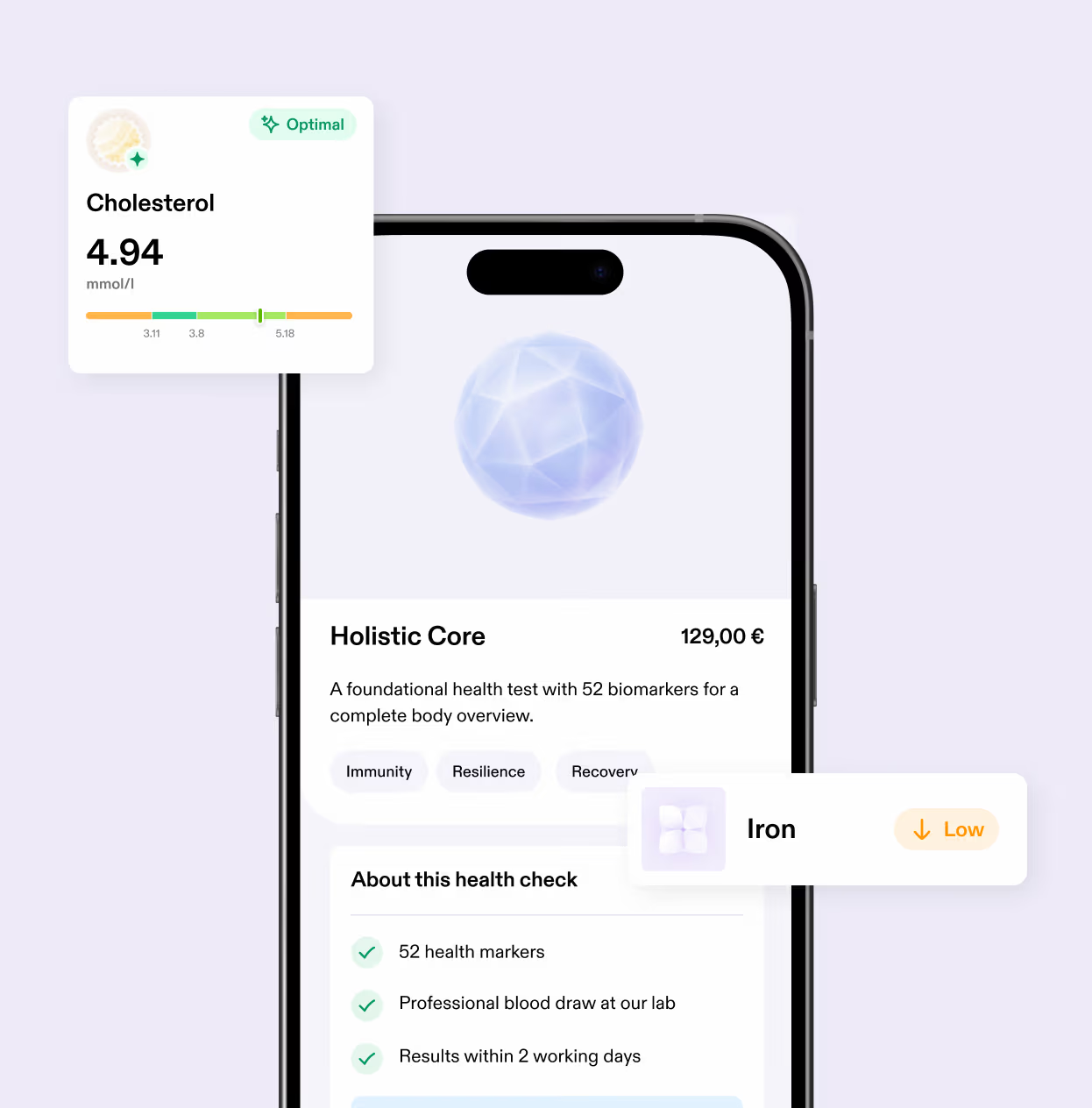
Holistic Core Package
A comprehensive baseline test covering heart health, metabolism, organ function, immune status, and inflammation for a full-body health overview.
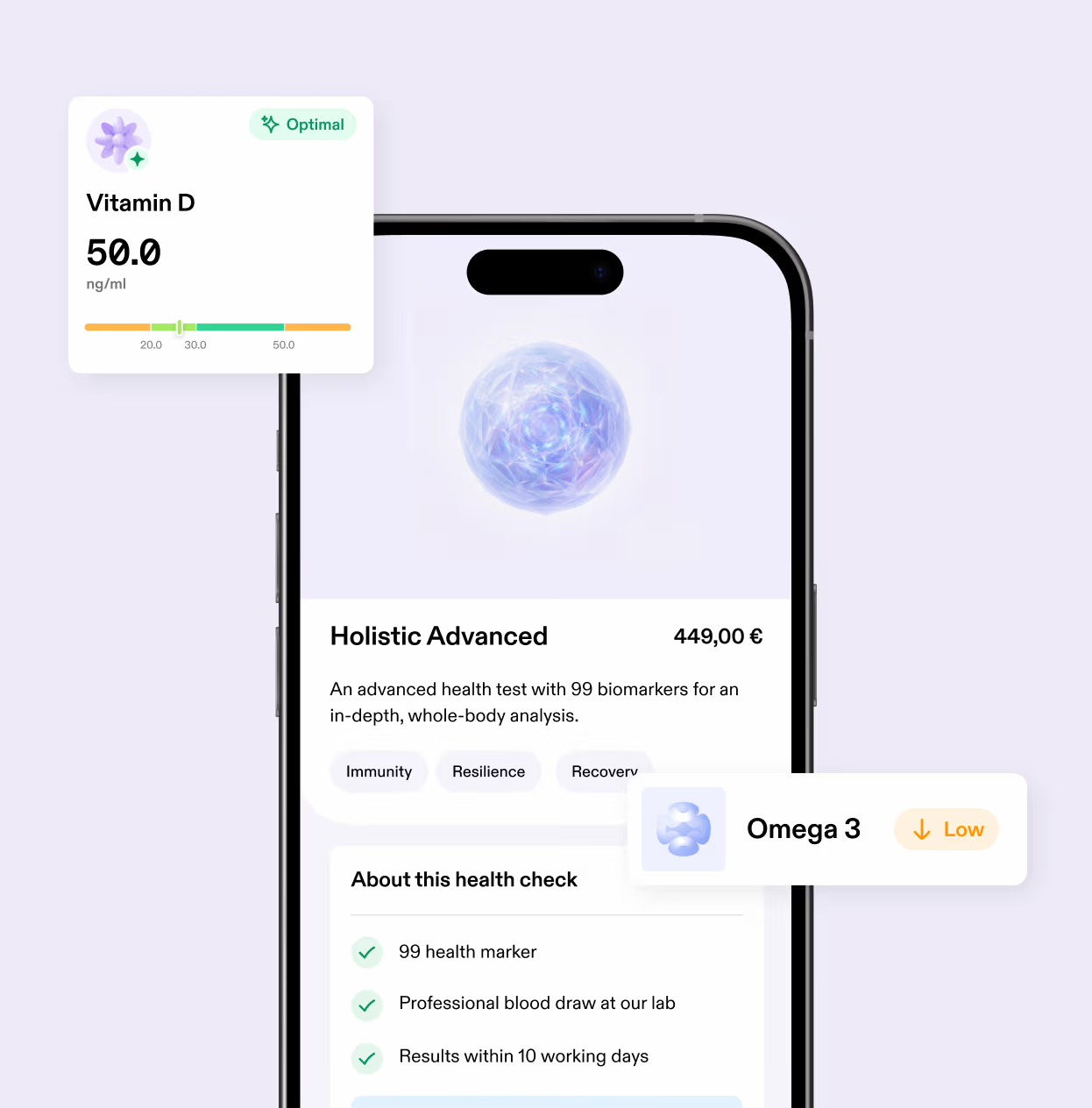
Holistic Advanced Package
Holistic Advanced measures 99 biomarkers to track metabolism, heart, organs & immunity.
Subscribe to our newsletter!
Articles, tips, and offers. Straight to your inbox.


Ready to take charge of your health?
Check, track, and improve your health and well-being.