
Updated on
July 28, 2026
The difference between feeling and knowing
The new year often begins with resolutions: more energy, better nutrition, targeted supplements. The impulse is right. The order is often wrong. Before you change anything, you should know where you stand.


You cannot reliably know what your body actually needs. Fatigue, low energy, or difficulty concentrating have many possible causes. Without data, it is just guesswork. Before starting new routines, supplements, or programs, you should know your biological status quo. Taking supplements without knowing your current blood values is often ineffective - and in some cases, counterproductive.
Feeling is not enough. Data provides clarity.
You might feel tired in January. This is common. However, the causes can vary: sleep quality, stress, lack of movement, minimal daylight - or a nutrient status that does not meet your needs. The problem is that many of these causes feel similar. Fatigue is a vague signal. Without measurements, it remains an interpretation. Feeling is important - it is your early warning system. Knowledge is more precise. It separates hypotheses from facts.
Why baseline testing should be broad
To create a real starting point, it makes sense to test a wide range of markers to "light up every corner." The lever for improvement is often not where you expect it to be. For holistic baseline testing, our Health Packages "Long-Term Health" and "All Biomarkers" for men and women are ideal. They provide a comprehensive picture instead of checking only individual values.
Why fatigue is difficult to categorize
Fatigue rarely stems from a single reason. Multiple factors often overlap:
- Sleep: duration, regularity, alcohol, screen time, restless nights.
- Stress: mental load, cortisol rhythm, lack of recovery.
- Lifestyle: movement, nutrition, hydration, caffeine timing.
- Season: less light, changed routines, lower activity levels.
- Nutrients: iron status, Vitamin B12, folate, Vitamin D - depending on the individual and their life situation. This makes "optimizing by feeling" risky. You might focus on a factor that is not the primary driver.
Example: Ferritin and Vitamin B12 - plausible, but not always the answer
Ferritin is a protein that stores iron. Iron contributes to the reduction of tiredness and fatigue. Vitamin B12 contributes to normal energy metabolism. Both sound like obvious solutions, yet there is no automatic link.
- You can feel tired even if Ferritin and B12 are within the reference range.
- You can have values outside the reference range without clearly feeling it.
- A single value rarely explains everything. The overall picture and context are what matter.
Without a biomarker test, you are left with guesses: "maybe iron," "maybe B12," or "maybe Vitamin D." This often leads to unnecessary action, such as taking supplements that are not needed or making changes that miss the core issue.
Why Testing is the First Step Instead of guessing
A blood test provides a snapshot of your current metabolic health. This "baseline" allows you to:
- Validate your needs: See if your nutrient levels (like Vitamin D, B12, or Folic Acid) are within the normal range.
- Target your efforts: Focus your nutrition or lifestyle changes on areas that actually need support.
- Create a benchmark: You can compare future results against this January 2026 baseline to see if your lifestyle changes are having an effect.
How data changes your approach
Data turns a vague symptom into a structured decision:
- You replace "trial and error" with "checking first."
- You reduce blind spots: too little, too much, or focusing on the wrong topic.
- You gain certainty: either because values are normal (providing relief) or because you can take specific action.
The Aware Approach
This year, swap the guesswork for data. Check your baseline, understand your reference ranges, and make informed decisions for your well-being.
Ready to take charge of your health?


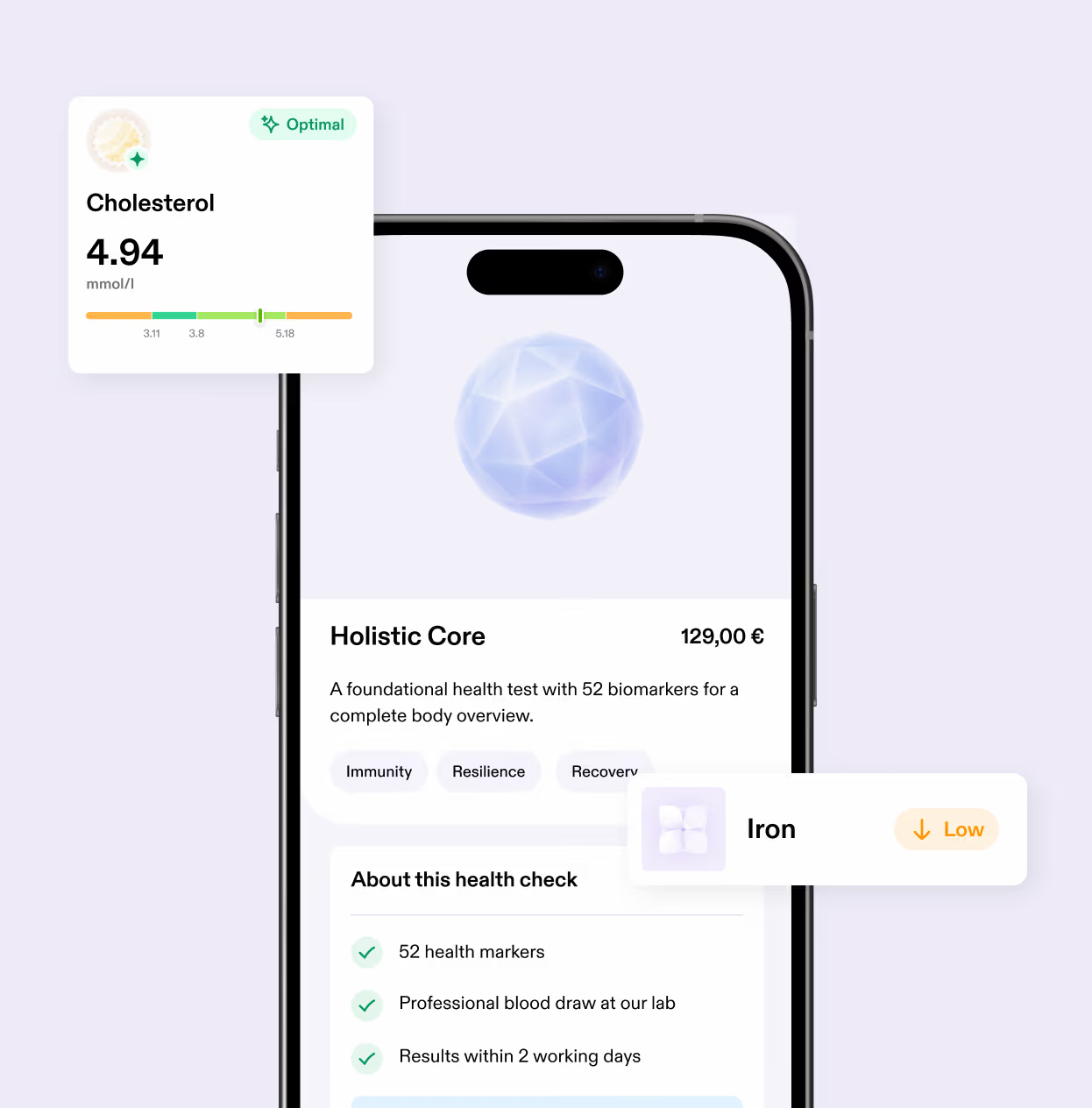
Holistic Core Package
A comprehensive baseline test covering heart health, metabolism, organ function, immune status, and inflammation for a full-body health overview.
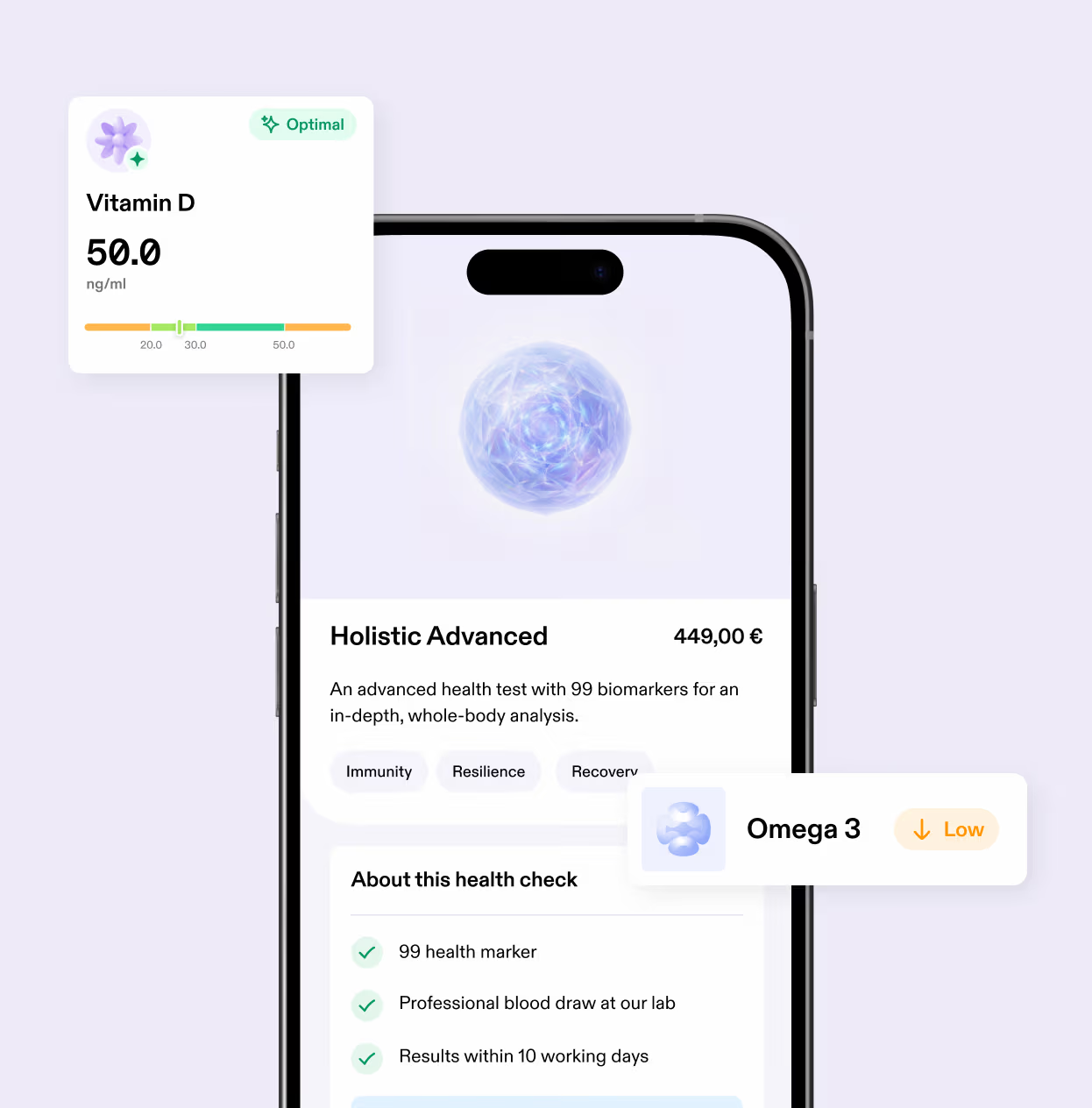
Holistic Advanced Package
Holistic Advanced measures 78 biomarkers to track metabolism, heart, organs & immunity.
Subscribe to our newsletter!
Articles, tips, and offers. Straight to your inbox.


Ready to take charge of your health?
Check, track, and improve your health and well-being.




.avif)
