
Updated on
July 28, 2026
Why is calcium key for runners? The lowdown on this vital mineral for bone health
We all need calcium to thrive. But runners should pay extra attention to support long-term bone health and prevent osteoporosis.

.avif)
As a runner, you know how important it is to have healthy bones and joints, whether you run casually to stay fit or train for marathons. To protect your bones, avoid fractures, and support long-term health, it’s essential to get enough calcium in your diet. Calcium plays an integral role in maintaining a strong muscle and skeletal system, and also affects your energy levels during physical activity. Although calcium can be found in many food sources, such as dairy products, leafy greens, nuts, and some fish, some runners, particularly female runners, may need a supplement to meet the daily required intake. Keep reading to learn all about this key mineral, why calcium matters so much for (female) runners, and how to ensure you’re getting enough of it to prevent injuries during a run.
Why calcium matters for long-term health
Calcium is a mineral the body needs to perform a variety of essential functions throughout your life. Along with phosphorus, calcium makes up the building blocks for strong bones and teeth. Your bones store approximately 99% of your body’s calcium, and the remaining; the 1% is in your blood, muscles, and tissues.
But calcium does so much more than support your bone health. It affects your entire body and is involved in the following functions:
- blood clotting and circulation
- heart function
- muscle movement
- communication between your brain and other parts of your body
Ready to take charge of your health?


Calcium helps your heart pump blood and your muscles contract, 2 things that are critical for running and other forms of physical activity.
Scientists also believe that calcium plays a role in mitochondrial function. The mitochondria is the powerhouse of the cell which helps transform food into energy. Evidence suggests that an increase in mitochondrial calcium can help produce more proteins that store energy. So, if you have enough calcium, you’ll stay energized for longer during a workout.
To perform all of these vital functions, your body needs to absorb calcium with the help of another essential nutrient for lifelong well-being Vitamin D. The sunshine hormone, vitamin D, activates calcium absorption from foods in the small intestine. But if you don’t have enough vitamin D, your body can’t absorb calcium as effectively from foods. Instead, you'll start drawing from from calcium stored in your bones, weakening the bones. This weakens your bones. So, paying attention to both of these nutrients is essential for optimal health across your lifetime – particularly for female runners.
Why (female) runners need to get enough calcium
Weight-bearing exercises, like hiking and running, and resistance exercises, like weight lifting, are great forms of activity to stay fit and build bone strength. When you run, you increase bone density and boost your cardiovascular health. Even just a minute or 2 of running has positive effects on bone strength.
But keep in mind that running is also a high-impact activity, which can put stress on the bones and joints. Stress fractures (small cracks in the bones that cause pain, tenderness, and swelling) are quite common in runners. For this reason, all runners, but particularly female runners, need to supply their bones with enough calcium.
Women are 4 times more likely than men to develop osteoporosis, a condition that weakens the bones and increases the chance of fractures. Osteoporosis is most common in women in postmenopause due to declining levels of estrogen, a hormone that plays a key role in maintaining bone structure. Too little calcium can result in the loss of bone mass too, setting the stage for osteoporosis.
Women of all ages should pay extra attention to calcium and vitamin D intake to support bone health and prevent injuries and osteoporosis.
Besides these key nutrients, other tips for runners include using proper footwear, cross-training, and gradually increasing the length and intensity of your runs.
Signs you don’t have enough calcium
Generally, a mild calcium deficiency doesn’t cause any symptoms. The only way to find out if you’re lacking calcium is with a blood test. As calcium levels go down, often the first sign people notice is frequent muscle cramps.
Too little calcium in the blood can lead to a condition called hypocalcemia. Symptoms can include:
- muscle cramps
- tingling in the lips, tongue, fingers, or feet
- brittle nails
- dry skin
- coarse hair
If left untreated, hypocalcemia can cause serious complications, so talk to your doctor if you’re experiencing these symptoms to find the cause.
If osteoporosis has weakened your bones, you may experience the following symptoms:
- back pain
- change in posture, such as stooping or bending forward
- loss of height over time
- bones that fracture easily
How much calcium and vitamin D do you need per day?
You may be wondering if, as a female runner, you need to consume more calcium than the average person, but that’s not the case. It’s just important to make sure you’re meeting the dietary requirements. Guidelines published by the European Food Information Council (EUFI) state that healthy adults need between 950–1,000 mg of calcium per day. Once women hit age 51 and men reach 70, the International Osteoporosis Foundation advises increasing calcium intake to 1,200 mg per day.
Make sure you’re also getting 800 IU of vitamin D each day to help your body absorb calcium. Although some foods contain vitamin D, we can only get a small portion (10—20%) of what we need through our diet. The majority of our vitamin D intake comes from sun exposure, which is why supplementation may be necessary in the winter months if you live in a cloudy place.
It’s possible to have too much calcium too, and guidelines advise against consuming more than 2,500 mg per day. But don’t worry about getting too much calcium from food – it’s very unlikely you would consume this much through diet alone. If you’re taking calcium supplements, pay attention to the recommended dosage and consult a healthcare professional if you have any questions. Over time, excess calcium may lead to muscle weakness, irregular heartbeats, and kidney problems.
How to boost your calcium levels
If you think of good sources of calcium, milk is likely the first thing that comes to mind. But calcium is widely available in a number of foods, from dairy products to vegetables and even fish.

Sport Package
Check and optimize biomarkers linked to cardiovascular health and athletic performance.
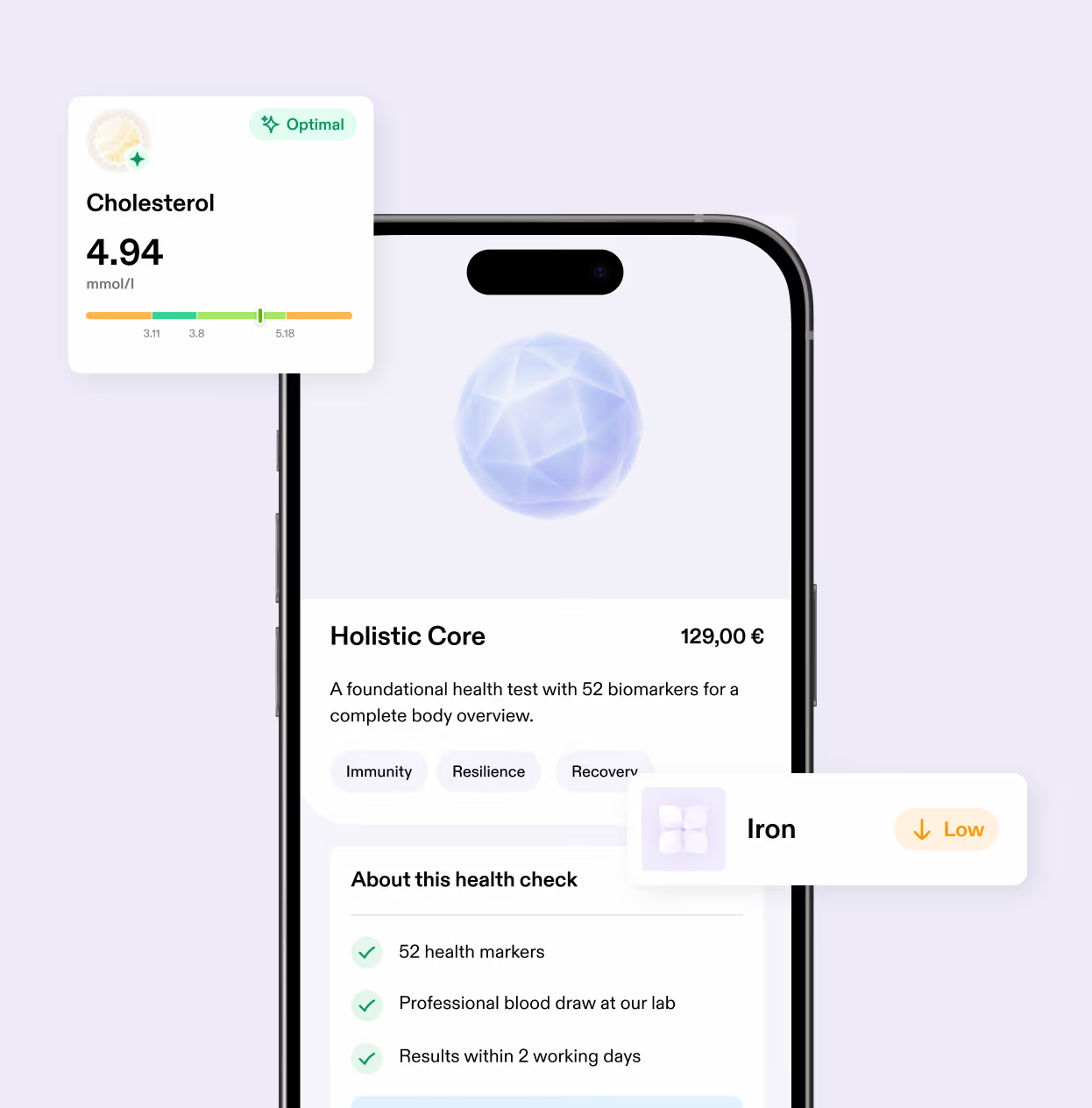
Holistic Core Package
A comprehensive baseline test covering heart health, metabolism, organ function, immune status, and inflammation for a full-body health overview.
Calcium-rich foods include:
- yogurt
- cheese
- dairy and fortified plant-based milk, including soy, almond, and rice
- fish with soft bones like canned sardines or salmon
- nuts
- legumes
- winter squash
- leafy greens like kale, spinach, bok choy, collard greens, and broccoli
When you want a big calcium boost, one food to consider that’s perhaps a bit unexpected is eggshells. Eggshells contain tons of calcium and can be eaten safely if you boil them and ground them into a powder. You can add eggshell powder to beverages (like by mixing into a smoothie) and food (such as putting it in your pasta sauce).
When monitoring your calcium intake, it’s important to note that the amount listed on the label is not necessarily the amount your body will absorb. That’s because your gut can’t break this mineral down very easily, so you’ll only be getting a portion of the calcium you consume. The amount that your body actually absorbs is called “calcium bioavailability.” Different foods have different calcium bioavailabilities.
For example, dairy has a calcium bioavailability of approximately 30%, according to Harvard T.H. Chan School of Public Health. This means that if a glass of milk has 300 mg of calcium, the body can absorb 100 mg. Plant-based foods tend to have lower amounts of calcium but a higher calcium bioavailability. A cup of bok choy, for instance, has a bioavailability of 50%. So when you eat a cup with 160 mg of calcium, your body will absorb 80 mg. If you think you’re not getting the daily required intake through your diet, you can talk to your doctor about finding a good calcium supplement.
How to find out if you have a calcium deficiency
You can check your calcium levels with a simple blood test. At Aware, we offer a comprehensive blood test that gives you a detailed look at your current nutrient levels and other vital health markers. Our Long-Term Health Check is an all-inclusive blood test that measures calcium and 39 other markers to give you insight into your health status now and for decades to come.
Note that if you get a blood test for calcium, some medications can affect the results. For instance, vitamin D, diuretics, and antacids can affect your blood calcium levels, so talk to your doctor about pausing these medications before visiting the lab so you get accurate results.
If you're ready to check, track, and improve your health and well-being, become an Aware member today.
The bottom line
- Calcium is a mineral that’s essential for many basic bodily functions, including building bones and keeping them strong throughout your life. To absorb calcium, your body needs enough vitamin D.
- Running (even for just a minute or 2) , jumping, and other weight-bearing exercises are excellent ways to strengthen your bones, but make sure to fuel your body with a calcium-rich diet to prevent fractures.
- Women over 50 have a higher chance of developing osteoporosis, a condition characterized by weak, brittle bones that may lead to stress fractures, so female runners need to be particularly mindful of their calcium intake to protect themselves from injury.
- Milk is often thought of as the best source of calcium, but other calcium-rich foods include eggshells, leafy greens, fish with soft bones, yogurt, cheese, nuts, and legumes.
The content provided here is for informational purposes only and does not constitute medical advice, diagnosis, or treatment. Blood tests offered by Aware are for wellness and preventive monitoring. Always seek the advice of your physician regarding any medical condition or if you have symptoms.
Subscribe to our newsletter!
Articles, tips, and offers. Straight to your inbox.


Ready to take charge of your health?
Check, track, and improve your health and well-being.




.avif)
