
Updated on
July 28, 2026
Stop Resolving. Start Prototyping: How to Design Your Health for 2026
Most of us approach the New Year with a “fix‑it” mindset. We treat our health like a broken appliance that needs repair. We set rigid goals - running a marathon, cutting out sugar, sleeping eight hours without checking whether those goals actually fit our lives.

.avif)
This year, we invite you to try a different approach. Instead of resolving, let’s try designing.
Why Design Thinking?
At its core, Design Thinking offers a powerful secret for health: systems beat goals.
Traditional resolutions rely on a “waterfall” method: plan everything perfectly at the start and hope it works. When it doesn’t, we blame willpower.
Design Thinking flips that. It assumes your first idea won’t be perfect. It encourages you to treat your habits like software in “beta mode”: test small changes, see what works, and iterate.
Think of it as applying principles from Eric Ries’s The Lean Startup to the most complex project of all - your life.
Using evidence‑informed principles and concepts from Burnett and Evans’s Designing Your Life, here’s how to build a 2026 that fits your unique biology and lifestyle.
1. Map Your Energy, Not Just Your Calories
Burnett notes that we often track the wrong data. Steps, calories, and weight can be helpful, but they rarely capture the most important signal: energy.
He recommends keeping a “Good Time Journal” to track when you’re in a state of flow versus when you feel depleted. For 2026, try applying this specifically to your health habits.
The Strategy: Health Energy Mapping
For one week, don’t change your routine - simply observe it.
The Activity: You went to a HIIT class.
The Energy Score: Did you feel energized (flow) or depleted (drag)?
The Insight: Perhaps high‑intensity sessions leave you tired, while strength training makes you feel grounded.
Why it works
You’re gathering data on what Burnett calls your “engagement.” When you build habits around activities that feel good and support your energy, they are easier to maintain. As Burnett writes: “Designers don’t analyze, think, and then do. Designers do, think, and do again.” (1)
2. Reframe Your “Dysfunctional Beliefs”
A core idea in life design is identifying “dysfunctional beliefs” stories that keep us stuck. These aren’t merely negative thoughts; they’re logical traps.
Common Traps, Reframed
The “Tuesday Ruin” Trap (All‑or‑Nothing)
Belief: “I had one slice of pizza on Tuesday, my week is ruined.”
Reframe: “Bodies process food continuously. One meal doesn’t define a week. I can choose a balanced dinner tonight.”
The “Sweat Equity” Trap (No Pain, No Gain)
Belief: “I only have 20 minutes, so it’s not worth exercising.”
Reframe: “Movement supports health regardless of duration. A short walk can still have benefits.”
The “Delayed Happiness” Trap (Outcome vs. Process)
Belief: “I’ll feel confident once I lose these last 5 kg.”
Reframe: “I may not control the scale today, but I can support my well‑being with consistent habits, including sleep and movement.”
3. Design Three Different Health Futures (Don’t Bet on Just One)
We often rely on a single plan and give up when reality shifts. Designers never rely on one path, they prototype multiple options.
The Strategy: The 3‑Path Health Plan
Sketch three versions of your life in 2026:
Path 1 : Optimization - Your current routines, slightly refined (better sleep hygiene, more vegetables, regular walking).
Path 2 : Pivot - What if circumstances change? If running isn’t comfortable, maybe swimming or yoga becomes your focus.
Path 3 : Wildcard - What would you explore if you couldn’t fail? Dancing, rowing, hiking in the Alps - anything inspiring.
Multiple paths reduce pressure and encourage curiosity rather than perfectionism.
4. Plan for Reality (Not Just Optimism) Using WOOP
Positive thinking can be motivating, but research shows it’s not always enough to change behavior. WOOP - developed by psychologist Gabriele Oettingen - anchors goals in reality through “mental contrasting.”
Wish: What is your goal? (e.g., “Support my cardiovascular health.”)
Outcome: How will it feel? (e.g., “More at ease and energetic.”)
Obstacle: What internal barrier may show up? (e.g., “I reach for salty snacks when stressed.”)
Plan: If [obstacle], then [action]. (e.g., “If I feel stressed, then I’ll pause and take a few slow breaths.”)
The Science
Studies show that this form of mental contrasting can improve follow‑through by helping people anticipate barriers. (2)
5. The “What? So What? Now What?” Reflection
If you want a simple weekly check‑in, use this framework widely applied in reflective practice (based on Rolfe et al.). (3)
What? My blood test showed low Vitamin D. I felt sluggish this week.
So What? This may help explain the low mood I experienced.
Now What? I’ll aim for regular morning light exposure and discuss my results with a healthcare professional.
A Note from Aware
At Aware, we believe that designing your health starts with accurate, objective data.
We provide tools to capture that data through comprehensive blood testing. In design thinking terms, you can’t evaluate a prototype without a feedback loop. Our tests can serve as that baseline. When you try a new routine, nutrition, supplements, sleep - we help you understand how your body responds.
This enables you to move beyond guesswork and begin designing a foundation for long‑term well‑being.
For You: The Aware “End‑of‑Year” Reading List
If you’re looking for meaningful gifts or holiday reading, these selections blend design, psychology, and behavior science:
Design & Behavior Experts
- Jesse Schell - The Art of Game Design
See health through the lens of game design. If it’s not engaging, redesign it. - BJ Fogg - Tiny Habits
Focus on making habits easier rather than relying on motivation. - Don Norman -The Design of Everyday Things
Failure often comes from design flaws in the system, not personal shortcomings. - James Clear - Atomic Habits
A practical framework built on cues, actions, and rewards.
Recommended Reading
- Designing Your Life - Burnett & Evans (methodology)
- Mindset - Carol Dweck (growth mindset)
- Why We Sleep - Matthew Walker (sleep science)
External Resources
- Character Lab - characterlab.org (Founded by Angela Duckworth; evidence‑based resources on habits and character.)
Ready to take charge of your health?


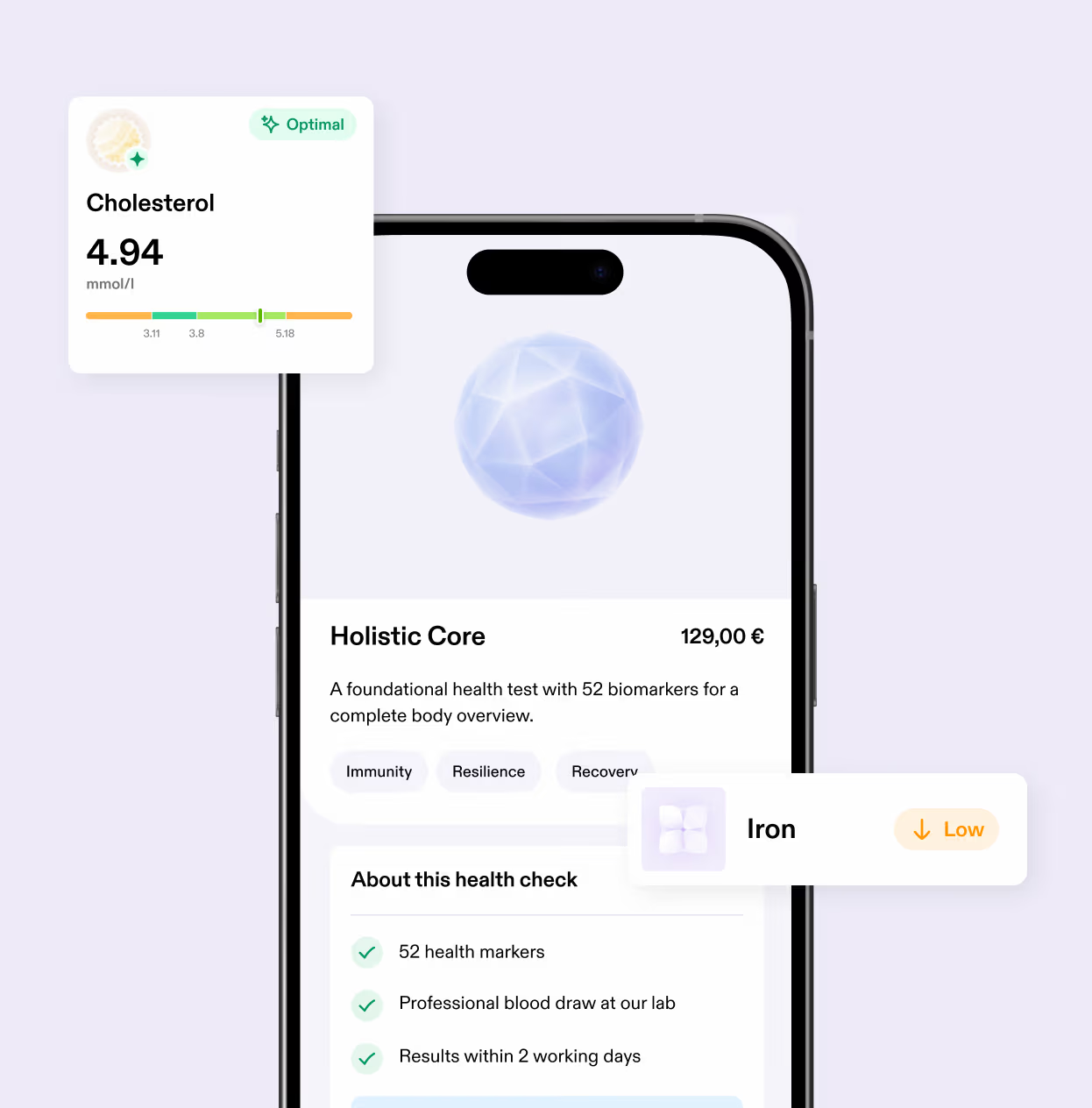
Holistic Core Package
A comprehensive baseline test covering heart health, metabolism, organ function, immune status, and inflammation for a full-body health overview.
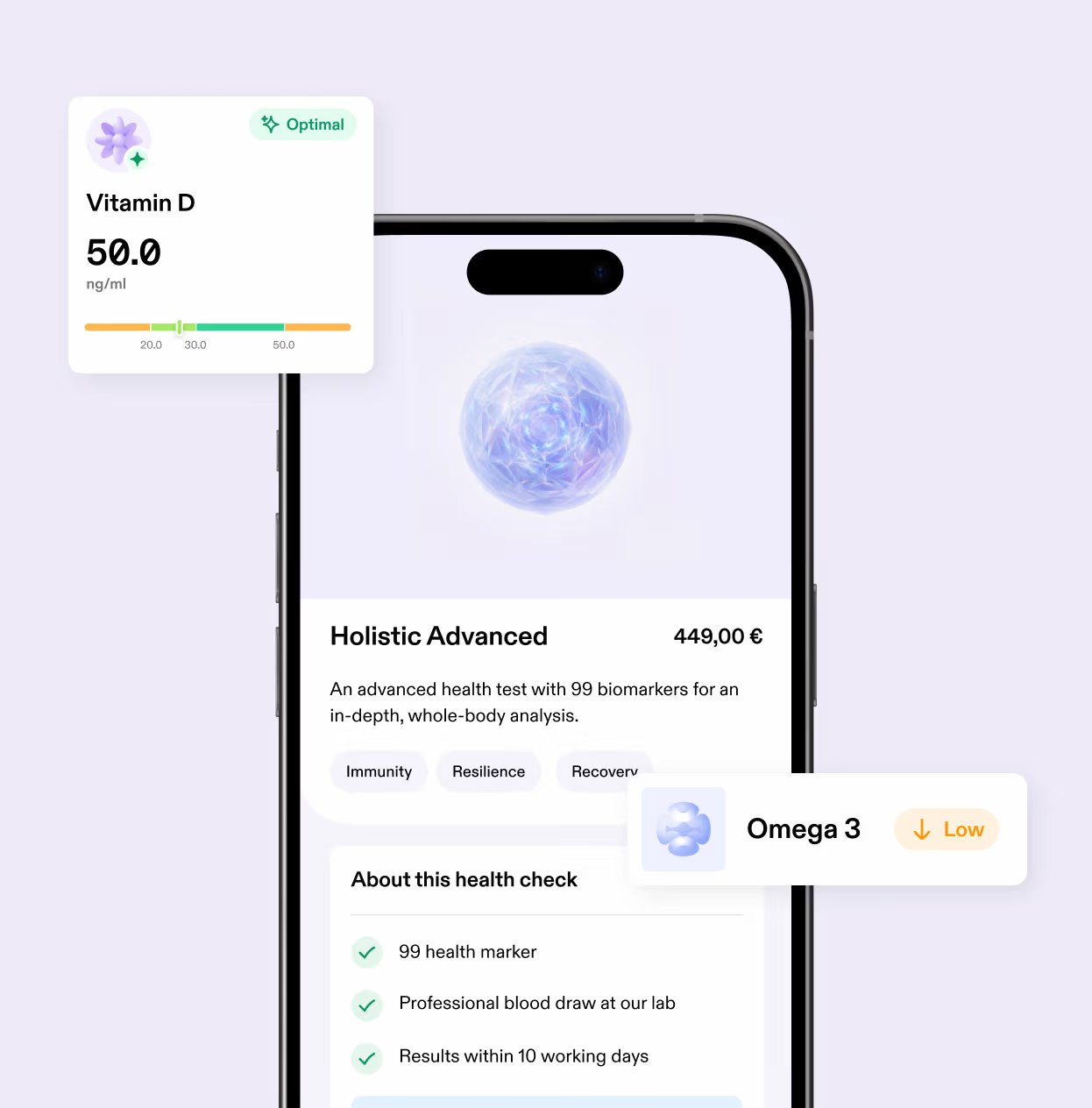
Holistic Advanced Package
Holistic Advanced measures 78 biomarkers to track metabolism, heart, organs & immunity.
The content provided here is for informational purposes only and does not constitute medical advice, diagnosis, or treatment. Blood tests offered by Aware are for wellness and preventive monitoring. Always seek the advice of your physician regarding any medical condition or if you have symptoms.
Subscribe to our newsletter!
Articles, tips, and offers. Straight to your inbox.


Ready to take charge of your health?
Check, track, and improve your health and well-being.




.avif)
