You wake up tired even after eight hours. By 3pm your focus is gone. You skip the run because you cannot quite face it. Nothing is obviously wrong, but nothing feels quite right either. You feel off, and that is a real signal, even when it is not yet a clear medical question.
"Feeling off" is one of the most honest descriptions of everyday health. It is also one of the hardest to act on. The symptoms are real but vague, the causes could be sleep, stress, nutrition, thyroid signalling, glucose handling, iron status or something non-medical, and most people tell themselves to push through. A blood test can help translate that vague feeling into measurable information, giving you and your doctor a clearer starting point for deciding what is worth discussing, repeating or simply tracking over time.
From a feeling to a shared next step
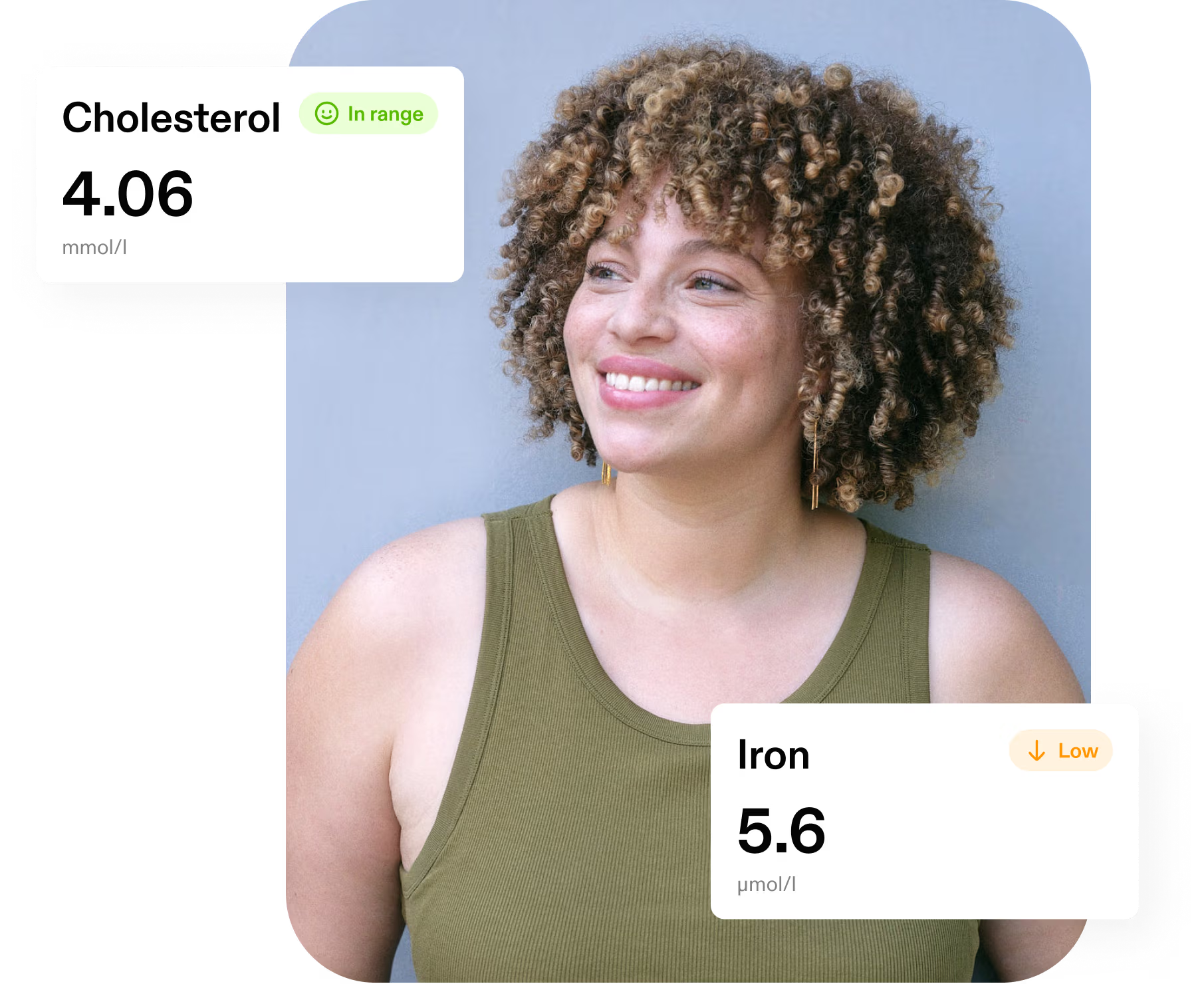
A blood draw does not replace the conversation. It gives it a clearer starting point.
Illustrative, not patient data. Reference ranges and units vary by laboratory.
Why vague symptoms are hard to act on
Vague symptoms have a quiet way of lasting for years. A bit tired in winter. A little foggy in meetings. Sleep that looks fine on paper, but leaves you flat in the morning. Each piece on its own is easy to explain away. Together they change how you move through the day without necessarily crossing the line into a clear disease picture.
This is where blood markers can be useful, not because every unusual value needs treatment, but because some common biological patterns are hard to feel from the outside. Mendes et al., 2019 estimated that 4.7% of European adults have undiagnosed hypothyroidism, mostly subclinical. In the German national health survey, Heidemann et al., 2016 found that about one in five adults met criteria for prediabetes. Younossi et al., 2016 estimated that roughly one quarter of adults globally have non-alcoholic fatty liver disease, which is often asymptomatic in early stages.
Those examples do not mean that tiredness equals thyroid disease, glucose dysregulation or liver disease. They mean something more practical: a person can feel only mildly different while a marker pattern is already worth understanding. Sometimes the next step is treatment. Sometimes it is repeat testing. Sometimes it is reassurance because the result fits the person, the history and the risk profile.
A blood marker is not a verdict. It is context you can bring into a better conversation.
Take-away. The goal is not to turn every vague symptom into a diagnosis. The goal is to replace guessing with a clearer baseline.
The symptom map: what to check, and where
The fastest way to make "off" more workable is to match what you notice with the marker groups most likely to add context, then choose the package that actually contains them. Long Term Health stays the best broad entry point, but it is not the answer to every pattern. If the question is clearly metabolic, nutritional, thyroid-related, inflammatory or hormone-related, a more targeted package can be the cleaner first step.
Persistent fatigue
Blood count, iron, TSH, glucose, HbA1c
Start with Long Term Health if the question is broad. Choose Nutrition if the story is mainly ferritin, Vitamin D or B vitamins. Choose Holistic Advanced if you want the wider fatigue layer in one panel.
Long Term Health / Nutrition / Holistic Advanced
Low mood, drive or libido shift
Vitamin D, B12, ferritin, plus sex hormones if the pattern fits
Nutrition covers common nutrient questions. Female Hormones and Male Hormones make sense for cycle, libido, testosterone or androgen questions. They do not include TSH, iron or HbA1c.
For this cluster, Holistic Advanced is the closest broad option because it combines thyroid hormones, ferritin, Vitamin D, hs-CRP and cortisol. If the question is only thyroid, Thyroid Health is the cleaner targeted panel.
Holistic Advanced / Thyroid Health
Brain fog, poor concentration
B12, Vitamin D, ferritin, TSH, glucose, HbA1c
Nutrition is the more direct fit for B vitamins, Vitamin D and ferritin. Long Term Health is better when you also want blood count, glucose, HbA1c, liver, kidney and TSH in one baseline.
Metabolism Core is the most direct match because it adds insulin and HOMA-Index. Holistic Core is broader if you also want hs-CRP and ApoB in the same metabolic baseline.
Metabolism Core / Holistic Core
Inflammation or heart-risk context
hs-CRP, ApoB, lipids
Healthy Heart is the lean option for hs-CRP and ApoB. Holistic Core or Holistic Advanced make more sense when you also want metabolism, liver, kidney and blood count.
Long Term Health covers the core liver markers plus lipase and amylase. Metabolism Core is useful when liver markers sit inside a broader weight, glucose or insulin question.
Long Term Health / Metabolism Core
Two boundaries matter. First, this map does not diagnose anything. Sudden, severe or progressive symptoms belong with a clinician, not a self-guided panel. Second, an out-of-range marker in someone without symptoms or risk does not automatically require treatment. It may need repeat testing, medical context, a look at medication or training, or no action at all.
Where to start if you are not sure
If your symptoms do not point cleanly to one cluster, start broad. Long Term Health covers 44 markers across lipids, kidney markers, liver enzymes, full blood count, electrolytes, glucose, HbA1c, TSH and iron. It covers many of the high-prevalence places where "feeling off" can have a measurable component: a slow shift in metabolic markers like creeping HbA1c, a quiet rise in liver enzymes that often tracks lifestyle before symptoms, iron status, or a thyroid signal that is starting to drift.
If the baseline points to a more specific question, targeted packages can fill in the missing layer. Metabolism Core adds insulin and HOMA-Index for energy crashes, cravings and weight questions. Nutrition covers ferritin, Vitamin D and B vitamins. Thyroid Health adds free T4 and free T3. Healthy Heart covers hs-CRP and ApoB. Holistic Core combines broad metabolism with hs-CRP and ApoB. Holistic Advanced is the widest option when fatigue, sleep, nutrition, thyroid and inflammation all feel relevant. Female Hormones and Male Hormones are for sex hormone questions, such as cycle-related symptoms, libido changes or androgen-related concerns. They do not include TSH, iron or HbA1c, so they should not be presented as the whole answer to general fatigue or low energy.
A cleaner way to route vague symptoms
Start with the symptom cluster, then choose the marker family that can add useful context.
Mood or drive: Vitamin D, B12, ferritin, sex hormones if the pattern fits
Fuel and weight: glucose, insulin, HOMA, triglycerides
Liver or gut context: AST, ALT, GGT, bilirubin, albumin
Broad or unclear: Long Term Health
Crashes or weight: Metabolism Core or Holistic Core
Nutrients: Nutrition or Holistic Advanced
Thyroid layer: Thyroid Health or Holistic Advanced
Sex hormone pattern: Female Hormones or Male Hormones
hs-CRP or ApoB: Healthy Heart, Holistic Core or Holistic Advanced
Illustrative, not patient data. The graphic groups symptoms by marker family, not by diagnosis.
Timing also changes what a result means. Thyroid tests are a good example. Sviridonova et al., 2013 found that median TSH was meaningfully lower in early-afternoon samples than in early-morning samples in patients with subclinical hypothyroidism, enough that some results would cross below the usual cutoff later in the day. The same person can look different depending on when the blood was drawn.
Take-away. Start with the package that answers the first question, then add detail only when the first result or your history justifies it.
The mindset shift: baseline first, then track
The most useful thing a first blood test does is give you a baseline. A single number is a snapshot. The same number six months later, after a training change, a nutrition change, a winter, a stressful period or a new medication, becomes part of a story. That is often where the value sits: not in one dramatic result, but in seeing whether your body is moving in the direction you expected.
Vitamin D is a simple example. Cashman et al., 2016 reported that 17.7% of Europeans tested in winter had 25-OH Vitamin D below 12 ng/ml, compared with 8.3% in summer. That kind of seasonal pattern is not something most people can feel precisely. Knowing your own baseline can help you discuss supplementation, sunlight exposure and retesting with appropriate context. It can also prevent over-interpreting one winter value as a permanent state.
The same logic applies to energy. Low energy is rarely one switch. It sits across blood count, thyroid signalling, glucose handling, inflammation, sleep rhythm, training load, mental health and how well your cells make energy in the first place. If you want to understand that deeper layer, our article on mitochondrial health and cellular energy is a useful next read.
Four small things to note before your result
1
Track timing, not just intensity. Morning, mid-afternoon, after meals, before your period, after hard training. Timing gives your doctor context.
2
Keep supplements stable before testing. For nutrient markers, avoid changing your supplement routine immediately before a baseline unless a clinician told you to.
3
Do not over-read one number. A single marker can be affected by sleep, infection, training, medication and timing. Patterns matter more than panic.
4
Bring the result into a conversation. A useful result helps decide whether to repeat, monitor, add a targeted marker or look somewhere else.
Recommended starting point
Long Term Health
A broad single-draw baseline with 44 markers across blood count, liver, kidneys, lipids, metabolism, electrolytes, TSH and iron. It is the most practical first step if you do not yet know which system to look at.
More specific concerns? Metabolism Core is the direct choice for weight, cravings or energy crashes. Nutrition covers ferritin, Vitamin D and B vitamins. Thyroid Health adds free T3 and free T4. Healthy Heart adds hs-CRP and ApoB. Holistic Core combines broad metabolism with hs-CRP and ApoB, while Holistic Advanced is the wider option when sleep, fatigue, nutrition, thyroid and inflammation all overlap. Female Hormones and Male Hormones cover sex hormones only; they do not include TSH, iron or HbA1c.
First blood test, frequently asked
Which blood test should I start with if I feel off but do not know why?
Long Term Health is the broadest practical starting point when you are not sure where to look. If your concern is more specific, the better first choice may be Metabolism Core, Nutrition, Thyroid Health, Healthy Heart, Holistic Core or Holistic Advanced. Long Term Health does not include Vitamin D, ferritin, hs-CRP or a full thyroid panel, so those need targeted packages if they are part of your question.
Are TSH, iron and HbA1c included in the hormone packages?
No. Female Hormones and Male Hormones focus on sex hormones. They include markers such as estradiol or testosterone, follicle-stimulating hormone, luteinizing hormone, prolactin and sex hormone-binding globulin. They do not include TSH, iron or HbA1c.
Do I need to fast before a blood test?
For Long Term Health and metabolic testing, fasting for at least 12 hours is the relevant preparation. In the article copy, glucose is still called glucose; fasting describes the preparation, not the reader-facing marker name. Hormone panels have different timing rules, such as cycle day or morning draw.
What does subclinical mean?
Subclinical means a measurable lab pattern can exist before it causes clear, specific symptoms. It does not automatically mean you are ill, and it does not automatically mean treatment. The result has to be read with symptoms, history, risk and sometimes a repeat test.
How often should I test if I feel fine?
There is no universal rule. A baseline can be useful if you want to track change over time, have relevant risk factors, change your routine or your doctor recommends follow-up. If you are asymptomatic and low risk, an isolated out-of-range value may simply need context or repeat testing rather than action.
EN. This article is for informational and educational purposes only. It does not constitute medical advice, a medical opinion, or a diagnosis, and must not be used as a substitute for professional medical consultation, diagnosis, or treatment. Aware's blood testing services are designed to provide health data, not to diagnose or treat medical conditions. Always consult a qualified healthcare professional before making changes to your health routine or if you have concerns about any symptoms.
DE. Dieser Artikel dient ausschliesslich zu Informations- und Bildungszwecken. Er stellt keine medizinische Beratung, kein medizinisches Gutachten und keine Diagnose dar und darf nicht als Ersatz für eine professionelle medizinische Beratung, Diagnose oder Behandlung verwendet werden. Die Bluttestdienste von Aware sind dazu bestimmt, Gesundheitsdaten bereitzustellen, und dienen nicht der Diagnose oder Behandlung von Krankheiten. Bitte wende dich immer an eine qualifizierte Ärztin oder einen qualifizierten Arzt, bevor du Änderungen an deiner Gesundheitsroutine vornimmst oder wenn du Bedenken hinsichtlich deiner Symptome hast.









.avif)
