
Updated on
March 23, 2026
Mitochondrial Health: Why Your Energy Starts at Cell Level
Feeling tired despite sleeping well is one of the most frustrating things to explain. You've tried more coffee, better habits, earlier bedtimes. But the real bottleneck might be much smaller than you think.


What Are Mitochondria, and Why Does Everyone Suddenly Care?
Mitochondria are organelles found inside almost every cell. Their job is to convert the food you eat and the oxygen you breathe into adenosine triphosphate, or ATP — the molecule your body uses as actual fuel. When biohackers talk about "cellular energy," this is precisely what they mean: the efficiency with which your mitochondria produce ATP.
The interest isn't just trendy. Research over the past decade has firmly linked mitochondrial function to aging, cognitive performance, metabolic health, and resilience to stress [1]. A body with well-functioning mitochondria processes nutrients efficiently, generates less oxidative waste, and recovers faster. A body with struggling mitochondria produces less energy — and you feel it.
The reason this topic resonates with so many people right now is that it reframes chronic tiredness in a way that actually makes sense. Persistent fatigue doesn't have to mean burnout or laziness. It can mean that the cellular machinery behind your energy production is working with suboptimal inputs.
"Your body's energy system is influenced by nutrients, metabolism, and inflammation — all of which leave a clear trace in your blood."
Ready to take charge of your health?


Why Mitochondrial Function Can't Be Separated from Blood Health
Here's the thing: you cannot directly measure mitochondrial function in a standard blood test. There is no "mitochondria level" on a lab report. But what you can measure are the conditions your mitochondria operate in — and those conditions are everything.
Think of mitochondria like a high-performance engine. The engine might be well-built, but if the fuel quality is poor, the oil is dirty, or the cooling system is overheating, performance will suffer. Several key blood biomarkers map directly onto this analogy. They tell you whether your mitochondria have the inputs they need — and whether anything is working against them.
How Mitochondria Actually Make Energy — the Mechanism, Simply Put
What's worth emphasising is that each step of this process depends on specific micronutrients. Iron and copper for the electron transport chain. B vitamins for the Krebs cycle. Magnesium for ATP synthesis itself. Vitamin D for mitochondrial biogenesis. This is why nutritional status is so directly relevant to how energised you feel — it's not abstract.
What Poor Mitochondrial Function Actually Feels Like
There's no single symptom list, because mitochondria are present in every tissue. But several patterns show up consistently. Persistent tiredness that isn't resolved by sleep is the most common. Brain fog — the feeling of thinking through wet cement — is another. Slow recovery after exercise, a tendency to feel cold, and mood instability can all reflect impaired cellular energy production.
The tricky part is that these symptoms overlap with dozens of other conditions. Thyroid dysfunction, anaemia, depression, sleep disorders — all can produce similar experiences. This is precisely why guessing at the cause is usually unhelpful. Testing the relevant biomarkers gives you something concrete to act on.
Track Your Mitochondrial Health with the Aware Holistic Advanced Panel
Aware's Holistic Advanced panel is the most comprehensive way to assess the biomarkers linked to mitochondrial health and cellular energy. With 99 biomarkers, it covers every key input in the energy production chain — from ferritin and both forms of vitamin B12, to fasting glucose, HbA1c, hs-CRP, vitamin D, magnesium in full blood, selenium, and cortisol.
You won't get a number labelled "mitochondrial function." What you will get is a precise picture of whether your body has the building blocks it needs — and where the gaps are. Results come with clear interpretations and actionable guidance, delivered through the Aware app within ten working days.
What to Do When You Have Your Results
Results become useful when they're specific. Here's how to think about the key markers in context of cellular energy:
Ferritin low (especially below 30 µg/L): This is one of the first things to address. Before assuming you need iron supplements, speak with a doctor — excess iron also causes problems. Diet-first approaches (red meat, legumes, vitamin C to aid absorption) are usually the starting point.
Vitamin B12 at the lower end of range: Aware tests both total B12 and holo-transcobalamin, the active form that reflects what your cells can actually use. Many labs only test total B12, which can miss a functional deficiency. If holo-TC is low, supplementation — ideally methylcobalamin — may be warranted, particularly if you eat little or no animal protein.
Vitamin D below 50 nmol/L: Research consistently supports supplementation. For most adults, 800–2,000 IU daily during autumn and winter is beneficial; re-test after 3 months to monitor progress [10, 19]. Note: Avoid excessive doses (over 4,000 IU daily) without medical supervision, as too much vitamin D can be harmful.
Fasting glucose or HbA1c trending upward: Even within the "normal" range, higher values correlate with more oxidative stress on mitochondria. Reducing refined carbohydrate intake, increasing fibre, and adding resistance training are among the most well-evidenced interventions [11].
hs-CRP elevated: Chronic inflammation is often diet-driven. A Mediterranean-style eating pattern rich in omega-3 fatty acids, polyphenols, and fibre has the strongest evidence for lowering hs-CRP [12]. Sleep quality, stress management, and movement all contribute too.
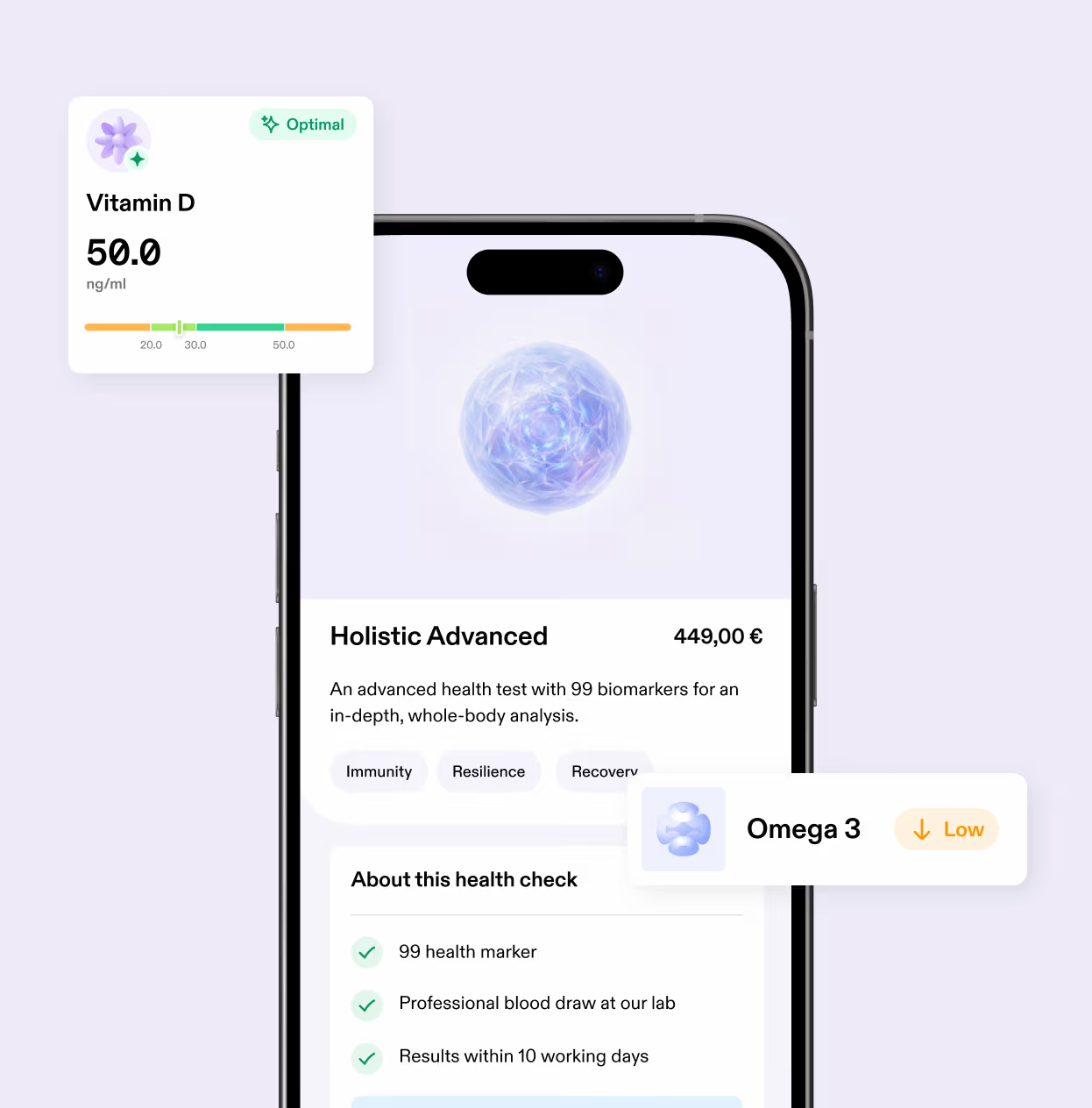
Holistic Advanced Package
Holistic Advanced measures 78 biomarkers to track metabolism, heart, organs & immunity.
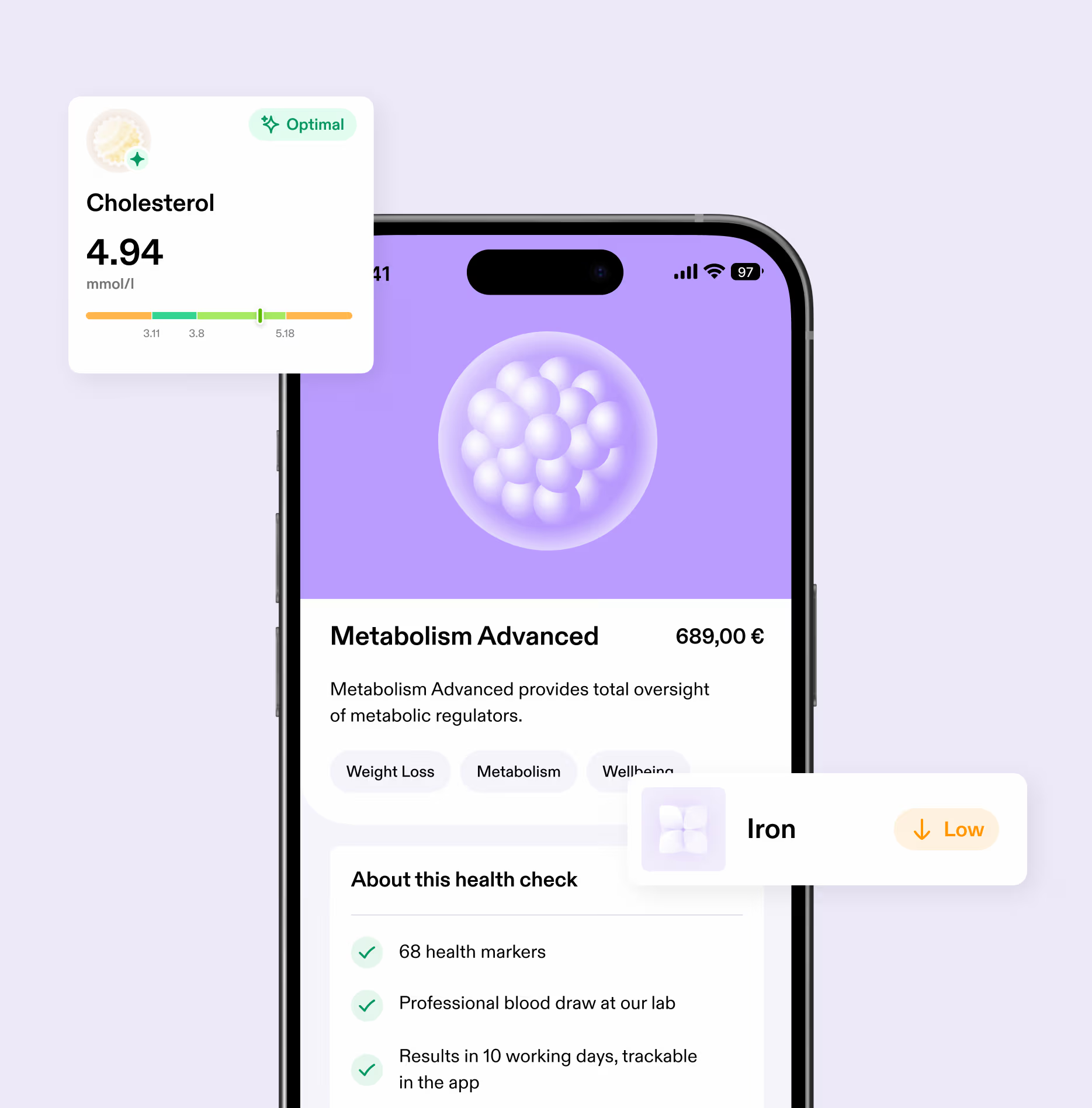
Metabolism Advanced Package
Metabolism Advanced provides total oversight of metabolic regulators.
Medical disclaimer: This article is for informational purposes only and does not constitute medical advice. Please consult a qualified healthcare professional for personal medical guidance.
How can I improve mitochondrial health?
Start with your numbers. A comprehensive blood panel identifies specific deficiencies and imbalances. From there, targeted changes — correcting nutrient gaps, managing blood glucose, reducing chronic inflammation through diet and movement — can have a meaningful effect on how energised you feel day to day.
Does vitamin D affect mitochondria?
Yes. Vitamin D receptors are present in mitochondria and regulate key enzymes involved in oxidative metabolism. Low vitamin D is associated with reduced mitochondrial biogenesis — the process your body uses to create new mitochondria — and is linked to increased fatigue.
Can you measure mitochondrial function with a blood test?
Not directly. There is no single biomarker for mitochondrial function. But key markers — ferritin, vitamin B12, vitamin D, fasting glucose, and hs-CRP — reflect the nutrient supply, metabolic environment, and inflammatory load that determine how well your mitochondria can function. Testing these gives you an accurate, actionable proxy.
Can a blood test tell you if your metabolism is slow?
Yes and no. There is no single marker labelled 'metabolic rate' — but a combination of thyroid hormones, fasting insulin, triglycerides, and glucose gives a reliable picture of how efficiently your body is managing energy. If thyroid function is low and insulin is elevated, those two factors alone can explain significant fatigue, weight resistance, and sluggish recovery.
What causes poor mitochondrial function?
The main drivers are nutrient deficiencies (iron, B12, vitamin D, magnesium), chronic low-grade inflammation, poor glucose regulation, high oxidative stress, and physical inactivity. Most of these can be assessed through routine blood testing and addressed with targeted lifestyle changes.
Subscribe to our newsletter!
Articles, tips, and offers. Straight to your inbox.


Ready to take charge of your health?
Check, track, and improve your health and well-being.




.avif)
