


Your wearable flags it before you've even had coffee. Recovery score down. The ring or band that usually sits comfortably in the green is stuck on amber. You slept seven hours, kept training light, stayed off the wine. Nothing obvious explains it.
Heart rate variability has become the metric of the moment, and for good reason. Most health wearables and smartwatches now measure it automatically overnight, turning it into a daily readiness score that millions of people check before they've had breakfast. But the score is only half the picture. It tells you that something is suppressing your autonomic nervous system. It cannot tell you what that something is.
That second part lives in your blood. Six measurable biomarkers are directly linked to heart rate variability through well-documented biological mechanisms. Knowing where yours stand turns a confusing amber score into something you can actually work with.
Why your nervous system produces this signal
Your heart doesn't beat like a metronome. Between each beat, the interval shifts by milliseconds, shaped by two branches of the autonomic nervous system pulling in opposite directions. The sympathetic branch acts like a gas pedal: under stress or exertion, it releases norepinephrine and accelerates the heart. The parasympathetic branch, working through the vagus nerve, is the brake. It slows the next beat, widens the interval, and increases variation.
The number your wearable reports overnight is based on a measure called RMSSD, which captures how much the gap between consecutive heartbeats varies from one beat to the next. Think of it as a readout of how actively the parasympathetic, rest-and-recover side of your nervous system is working while you sleep. High RMSSD means it's working well. Low RMSSD means something is damping it down. Most apps translate this into a 0–100 readiness or recovery score.
High heart rate variability means the vagal brake is strong and responsive. Your nervous system is fluid, able to shift quickly from high alert to deep rest. Low HRV means the system has stiffened, often because something is keeping it in low-grade sympathetic drive. That something might be psychological stress, poor sleep, or heavy training. But it is just as likely to be something quieter and more chronic: an inflammatory marker creeping up, a thyroid that has drifted, a ferritin level that has been sliding for months.
"Wearables read the signal. Blood tests explain where it's coming from."
Ready to take charge of your health?


The six blood markers behind your recovery score
The autonomic nervous system does not operate in isolation. It responds in real time to what is circulating in your blood: inflammation levels, hormones, micronutrients, the state of your thyroid. Six biomarkers are particularly well-evidenced in their effect on HRV, each through a distinct mechanism.
The inflammation connection is the most studied of these relationships. Elevated hs-CRP consistently correlates with lower heart rate variability across populations. The mechanism is specific: the vagus nerve is part of the body's cholinergic anti-inflammatory pathway, actively suppressing cytokine production throughout the body. When systemic inflammation is chronically high, this pathway is dampened, vagal tone falls, and your overnight recovery score drops with it. (Williams et al., 2019)
Thyroid function sits at the other end of the effect-size spectrum. Its influence on autonomic tone is one of the strongest of any measurable blood marker, and importantly, one of the most reversible. Research shows that restoring thyroid levels to normal range consistently brings HRV measures back toward baseline, making thyroid one of the more directly actionable findings in this space. (Brusseau et al., 2022)
Omega-3s are the other side of the coin. An 8-week randomised controlled trial found that consistent high-dose EPA and DHA intake measurably improved overnight heart rate variability compared to placebo, working both through direct electrophysiological effects on cardiac cell membranes and by reducing the inflammatory load that suppresses the vagal circuit. (Sauder et al., 2013)
How to check your recovery biomarkers with Aware
Aware's Sport package covers the markers most directly linked to performance and overnight recovery in a single blood draw: hs-CRP, ferritin, vitamin D, the Omega-3 Index, and HbA1c as a longer-term window into metabolic stress. Results are back within two to ten working days and displayed in the Aware app with plain-language explanations, reference ranges, and trend tracking so you can watch how your markers move across test cycles.
What to do once you have your results
A result is a starting point. The value of testing is not any single number but the direction it gives you. Here is where the evidence points.
If hs-CRP is elevated, start with the basics. Reducing ultra-processed foods, stabilising your sleep schedule, and managing psychological load consistently lower systemic inflammation over weeks. Supplements should come second, not first.
Check your Omega-3 Index before adding fish oil. An index below 8% is a reasonable threshold for targeted supplementation. Consistent EPA and DHA intake over 8 to 12 weeks may improve vagal tone and reduce resting heart rate by a few beats per minute.
Take vitamin D deficiency seriously. Particularly after a long winter. Below 20 ng/ml is associated with measurably reduced autonomic flexibility. Dose should be guided by your actual level, not a generic recommendation. Retest after 8 to 12 weeks to confirm you've responded.
Don't dismiss thyroid markers sitting at range edges. TSH at the upper end of normal, or fT3 at the lower end, can produce real effects on recovery that standard clinical thresholds do not capture. These are worth a conversation with your doctor and a follow-up test a few months later.
Retest in 3 to 6 months, not 3 weeks. HRV lags behind blood marker changes. The chain runs: lifestyle or supplementation change, then a blood marker shift, then an autonomic adaptation, then a stable HRV trend. Patience and a comparison test are both part of the process.

Sport Package
Check and optimize biomarkers linked to cardiovascular health and athletic performance.
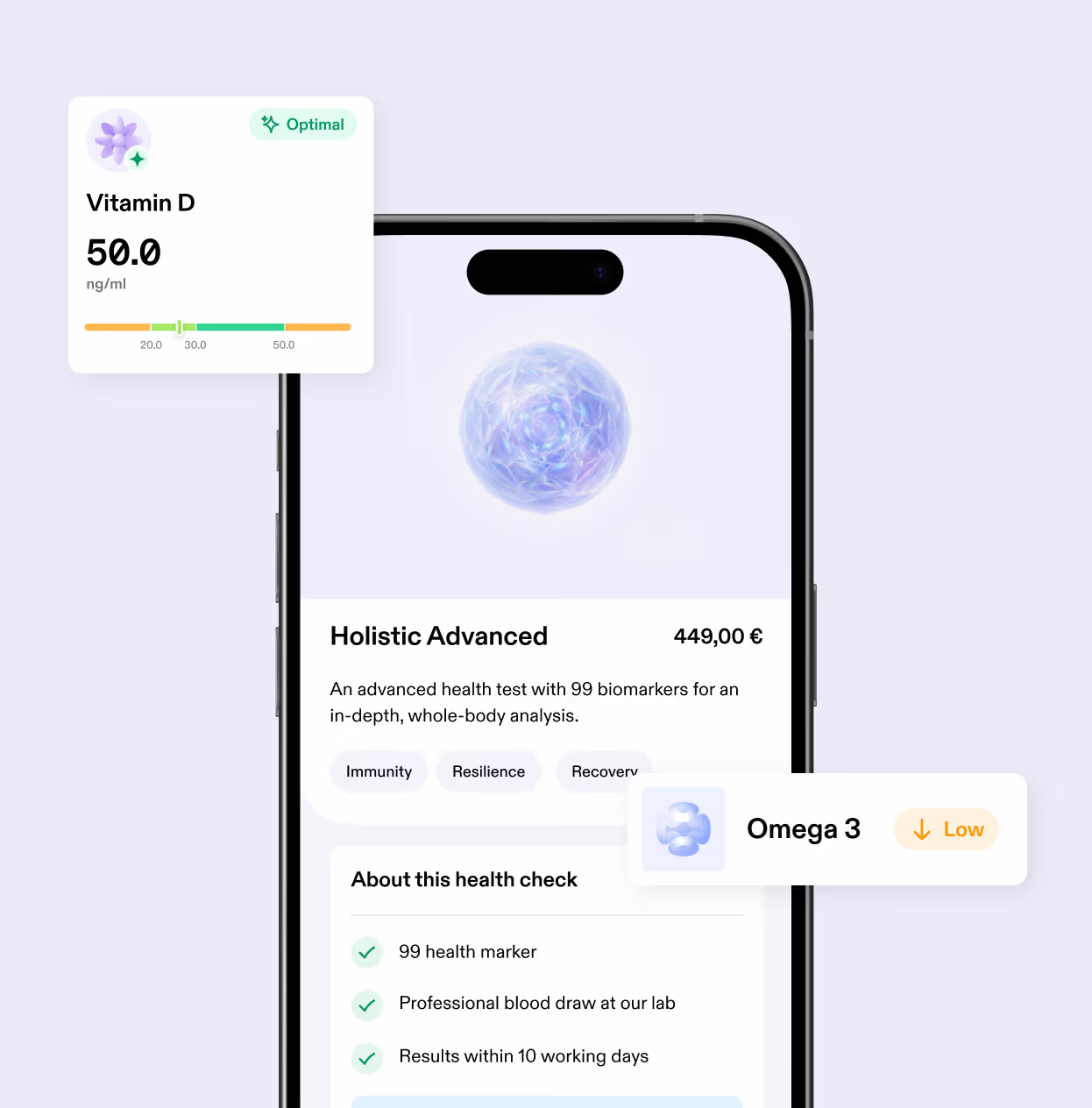
Holistic Advanced Package
Holistic Advanced measures 78 biomarkers to track metabolism, heart, organs & immunity.
What is a good HRV score?
HRV is highly individual. What matters most is your personal baseline and how it trends over time. A score consistently above your own average generally reflects good recovery and autonomic adaptability.
Can blood biomarkers affect HRV?
Yes. Research links several blood markers, including hs-CRP, omega-3 status, vitamin D, ferritin, thyroid hormones, and cortisol, to changes in heart rate variability through documented biological mechanisms. Addressing these through diet, lifestyle, and targeted supplementation may support autonomic health over time.
Why is my HRV low even when I sleep well?
Sleep is only one input into your HRV score. Subclinical inflammation, low ferritin, thyroid imbalance, vitamin D deficiency, and chronically elevated cortisol can all suppress vagal tone and lower overnight HRV even after a good night's sleep. A blood panel can help identify which factor is involved.
How do wearables measure HRV?
Most health wearables and smartwatches measure HRV automatically overnight using optical sensors. They calculate RMSSD, a measure of how much the time between consecutive heartbeats varies from one beat to the next, and translate it into a daily readiness or recovery score.
How long does it take to improve HRV through lifestyle changes?
HRV is a lagging indicator. Changes to biomarkers through diet, supplementation, or lifestyle typically take 4 to 12 weeks to appear in blood results, and longer to show as a stable HRV trend. Retesting at 3 to 6 months gives you a meaningful before-and-after comparison.
Subscribe to our newsletter!
Articles, tips, and offers. Straight to your inbox.


Ready to take charge of your health?
Check, track, and improve your health and well-being.




.avif)
