
Updated on
July 28, 2026
From Snapshot to Feature Film: Why Your Health Data Needs a Storyline
You leave the doctor’s office with a brief "Everything looks good" or a short letter confirming your values are within normal limits. It feels like a relief. But often, that binary pass or fail verdict hides the full story.


In standard diagnostics, a value sitting on the very edge of the limit often gets the same green checkmark as a perfect score. It might be technically normal but trending steadily in the wrong direction. Biologically, these two states are worlds apart. Being "within range" does not always mean you are thriving. It often just means you do not have a diagnosable illness yet.
Furthermore, that single result is just a snapshot. It captures your biology at one specific millisecond in time. To truly understand your health, you need more than a snapshot. You need the whole movie. This is the science of longitudinal tracking.
The Biology of Fluctuation
Biological markers naturally oscillate, a concept known as biological variation. If you only test once, you cannot separate the noise (like a bad night's sleep) from the signal (a developing health risk).
- Acute changes: Some markers, like Cortisol, react instantly to stress or your morning commute.
- Medium-term changes: Markers like Thyroid-stimulating hormone (TSH) can shift due to sleep quality or transient illness.
- Long-term trends: Metabolic markers like HbA1c change slowly and reflect months of lifestyle habits.
Spotting the Trend Before the Risk
The power of regular testing lies in identifying a trajectory while you are still technically healthy. We want to catch the curve before it dips. Here is how trending specific biomarkers from our Holistic Core and Holistic Advanced packages provides actionable insights.
1. The Metabolism Narrative: HbA1c
HbA1c measures glycated hemoglobin. This is essentially how much sugar has stuck to your red blood cells over the last 2 to 3 months.
A value of 5.4% might be considered normal. But if you were at 4.9% last year and 5.2% six months ago, the trend suggests your glucose metabolism is struggling. This could be due to creeping dietary habits or reduced insulin sensitivity. Catching this upward trend allows you to adjust your nutrition before you leave the healthy range.
2. The Cardiovascular Story: Beyond Cholesterol
While Total Cholesterol and LDL are standard, the Holistic Advanced package includes Apolipoprotein B (ApoB). ApoB is often considered a more precise predictor of cardiovascular risk because it counts the actual number of atherogenic particles.
You might start a new high-fat diet, like Keto. A single spike in lipids might be a temporary adaptation. However, a sustained upward trend in ApoB over two tests indicates that your body isn't processing those fats efficiently. This signals a need to pivot your strategy to protect your heart health.
3. The Seasonal Arc: Vitamin D
We all know how rare the sun can be here in February. Vitamin D (25-OH) is crucial for immune function and bone health.
Biologically, levels drop in winter. But the question is how much do yours drop? Testing in summer (peak) and late winter (trough) helps you calculate the precise supplementation dosage you need to maintain a steady baseline year-round rather than guessing.
4. The Inflammation Baseline: hs-CRP
Ultrasensitive C-reactive protein (hs-CRP) measures low-grade, systemic inflammation.
A single high reading could just mean you had a minor cold or did a heavy gym session yesterday. But a chronically elevating baseline of hs-CRP over time is a silent alarm for systemic stress, often linked to lifestyle factors that need addressing.
Proactive vs. Reactive
The traditional medical model is often reactive. We wait for a symptom, and then we test to diagnose. In preventive health, we flip the script. The goal is not to diagnose an illness today but to recognize risk factors early.
By identifying a trend while your values are still in the normal or borderline range, you have the opportunity to adjust your lifestyle proactively. You aren't fixing a problem. You are optimizing a system.
3 Rules for Building Your Data History
Consistency makes your trends accurate. Treat your body like a scientific experiment.
- Standardize the Conditions: Try to book your appointment for the same time of day, ideally around 8:00 AM. Hormones like Testosterone and Cortisol have a circadian rhythm and drop significantly throughout the day.
- Fast Properly: For metabolic markers like Glucose - Fasting and Triglycerides, strictly adhere to the fasting window (usually 8-12 hours, water only) to ensure data comparability.
- Contextualize: Use the Aware app to note what happened around the test. Did you run a marathon two days before? That might spike your Creatine Kinase (CK). Context turns data into intelligence.
Turn Your Health Into a Strategy
One data point is a start. Two provide a comparison. Three establish a trend.
If you are ready to stop guessing and start understanding your body's unique story, consistency is your best tool. We recommend checking your core values every 3 to 6 months to build a reliable history.
How to start:
- Book: Appointments take seconds on the Aware app.
- Test: Choose the Holistic Core for essential monitoring or the Holistic Advanced for a deeper look into longevity markers like ApoB and Vitamin D.
- Optimize: Receive results directly in the app with lifestyle context.
- Repeat: Re-test to validate that your lifestyle changes are working.
Your health is a long-term project. Don't settle for a snapshot when you can watch the whole film.
Ready to take charge of your health?


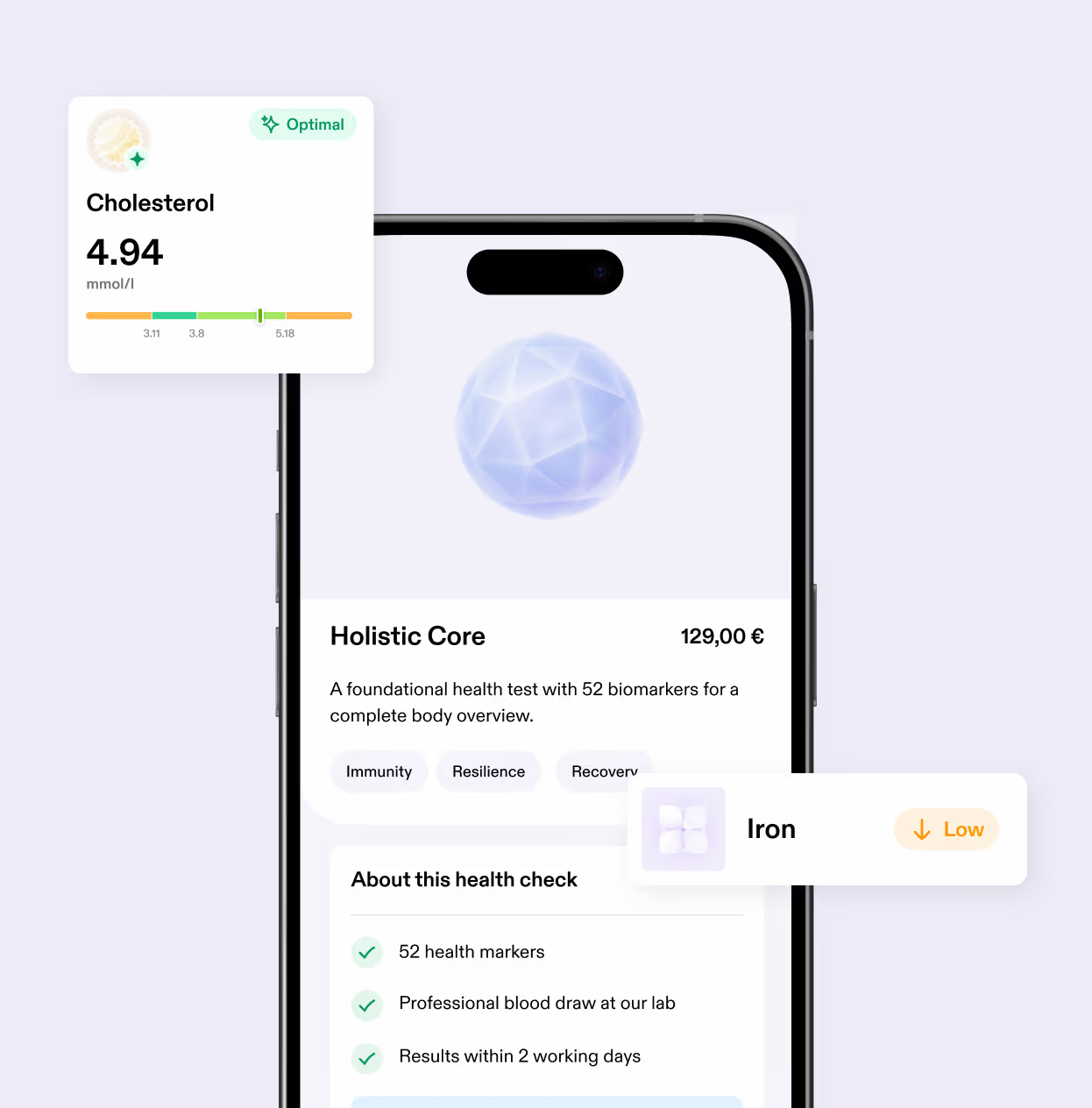
Holistic Core Package
A comprehensive baseline test covering heart health, metabolism, organ function, immune status, and inflammation for a full-body health overview.
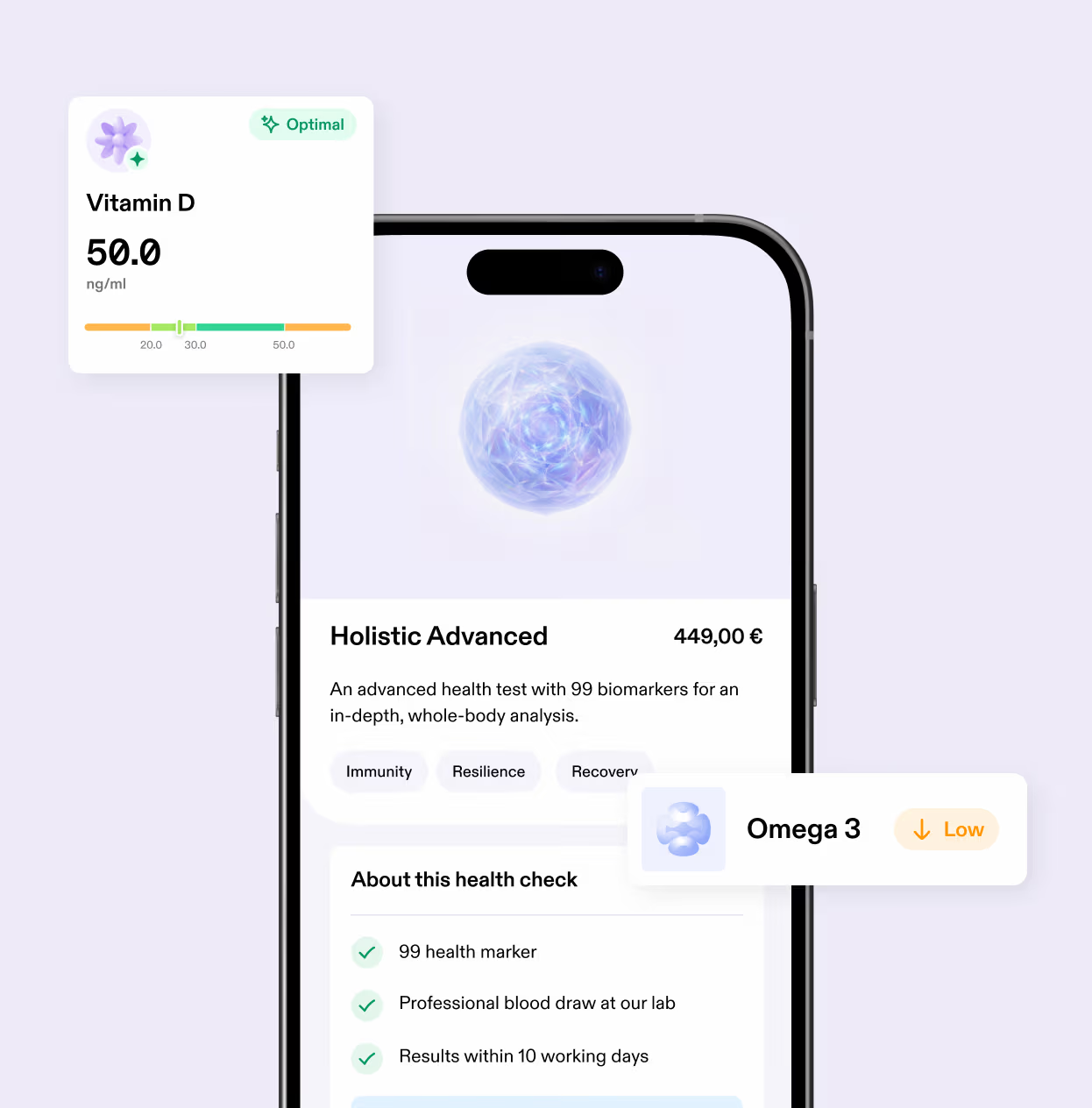
Holistic Advanced Package
Holistic Advanced measures 78 biomarkers to track metabolism, heart, organs & immunity.
Disclaimer: This article is for informational purposes only and does not constitute medical advice, diagnosis, or treatment. The services provided by Aware are not a substitute for professional medical consultation. Always seek the advice of your physician or another qualified health provider with any questions you may have regarding a medical condition. Never disregard professional medical advice or delay in seeking it because of something you have read here.
Reference ranges are statistical averages. A value outside the range does not automatically indicate disease, and a value inside does not guarantee health. Regular monitoring is a tool for awareness. Always discuss concerning trends with a healthcare professional.
Subscribe to our newsletter!
Articles, tips, and offers. Straight to your inbox.


Ready to take charge of your health?
Check, track, and improve your health and well-being.




.avif)
